


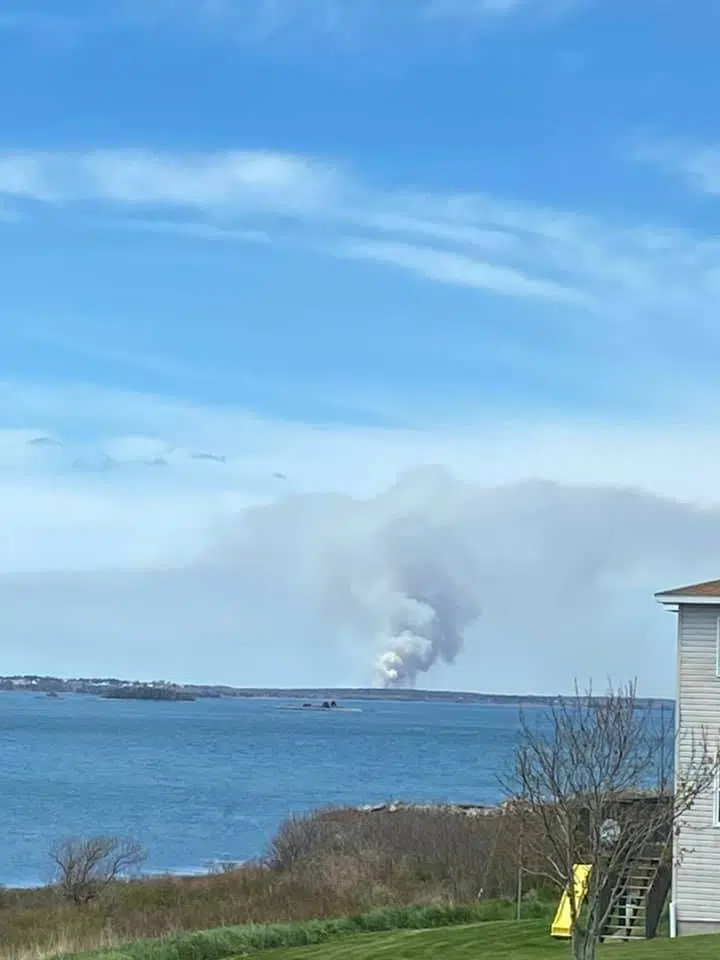
Smoke from a forest fire burning in the Argyle area in May 2020 is visible from communities kilometres away. Image by Kendra Nickerson, c/o Facebook.
With wildfire season in full effect, provincial officials are hammering home the need for residents to exercise caution.
Wildfire Prevention Officer for the Department of Lands and Forestry Kara McCurdy says it’s crucial for people to check the province’s online burn safe map before starting any fires, and to avoid burning between 8 a.m. and 2 p.m. regardless.
“The green means you can burn after 2 p.m., yellow is after 7 p.m., and red is not at all,” she said. “What’s really confusing folks is that between 8 a.m. and 2 p.m., the look at the map and it’s grey. That is the time of day that we don’t want anybody burning.”
McCurdy says even though it’s still early in the season, there has been significantly more wildfire activity this year.
“We’ve had 95 wildfires burning 628 hectares,” she explained. “Last season, we only had 87 burning 124 hectares. With the fire causes being 100% human caused, we feel that some folks aren’t heeding our warning.”
She also notes that people driving ATVs on trails in tinder-dry conditions pose a risk, and should exercise extreme caution.
She recommends taking occasional breaks in order to let the machine cool down, and make sure your exhaust is clear of any debris.
McCurdy also explains that if you do stop for a breather, to make sure your exhaust isn’t sitting in any type of vegetation or tall grass, because it can potentially ignite.
Surprisingly, discarded cigarette butts are not tagged as a source of forest fires in Nova Scotia due to the climate.
Though the summer can be scorching, Nova Scotia tends to remain quite humid.
Typically, forest fires ignited by cigarette butts happen in very hot, very dry conditions.
Burning restrictions by county also available by toll free phone line, recorded message updated daily: 1-855-564-2876(BURN).