


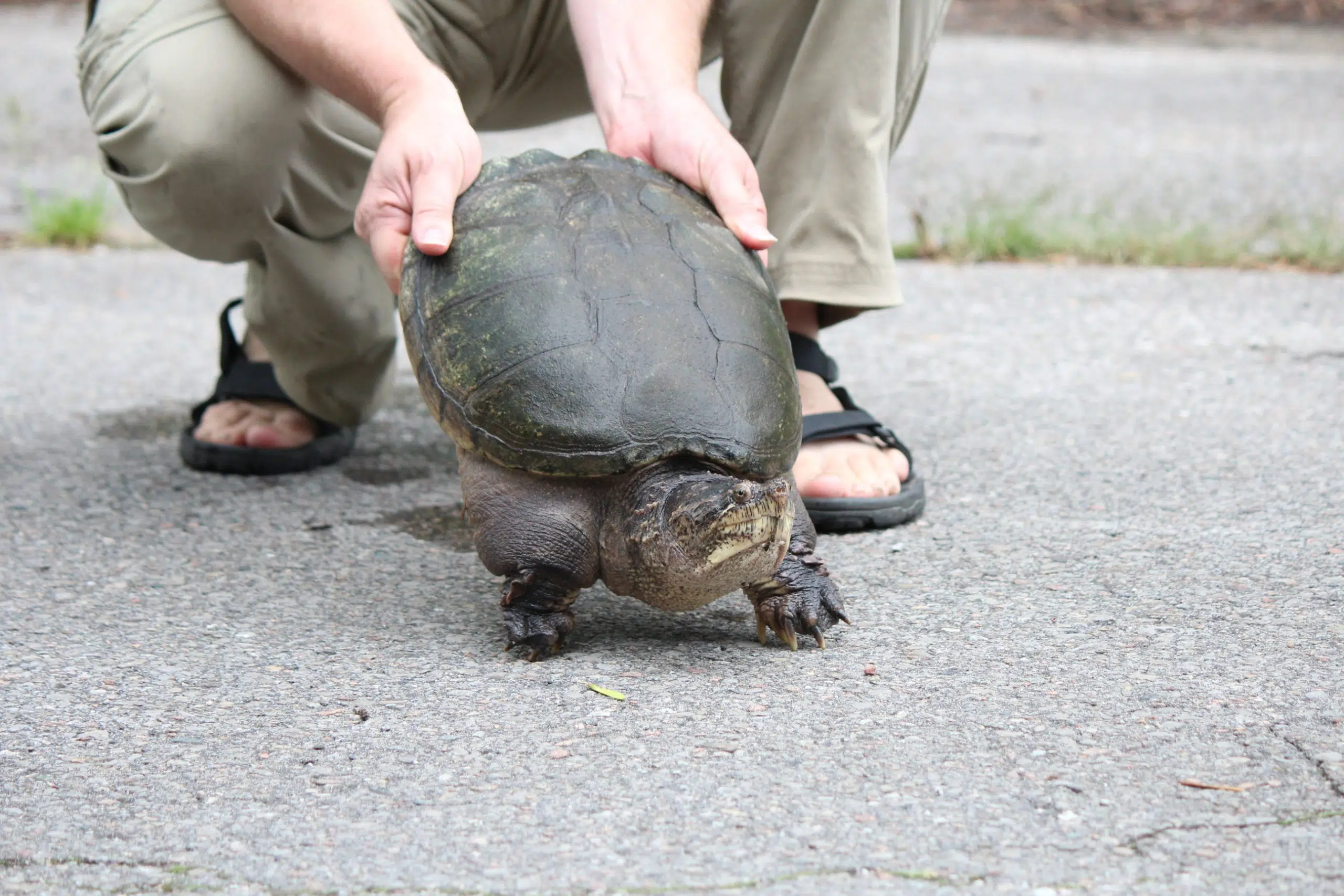
(photo courtesy of Nature Conservacy of Canada)
If you’re out for a drive, you may want to keep your eyes open for turtles.
It’s the time of year when many are laying eggs.
Andrew Holland, from the Nature Conservancy of Canada says populations of turtles are declining in many provinces, including Nova Scotia.
“Collisions with vehicles is one of the main reasons. Loss of habitat is another. this is the time of year when turtles venture out onto roadways.”
He says the main turtles in this part of the province are the endangered Blanding’s, now numbering less than 500.
They and painted turtles can be picked up by hand and moved.
Snapping turtles can be nasty and Holland says you can grab their hind legs and “wheelbarrow” them off the road or use a shovel.
Tips and facts:
- To help a turtle safely cross the road, first make sure the road is safe for you to pull over and help. Put your safety first.
- Move the turtle in the direction it was going, otherwise it will likely try to cross again.
- For turtles that hide their heads in their shells (like the Blanding’s turtle and the Midland painted turtle), simply pick the turtle up and carry it across the road. Carry it close to the ground — you don’t want to drop it.
- Snapping turtles weigh as much as 34 kilograms (75 pounds) and have heavy, spiked tails and massive armoured shells. These turtles cannot hide their heads in their shells and have a dangerously sharp snout.
- Snapping turtles are big and grey. To move them and avoid injury, lift using the “handles” on either side of their tales on the back of their shells and “wheelbarrow” them across the road on their front legs. If you have a car matt or a shovel, carefully slide the turtle onto this and drag it across.
- Back away, and let the turtle be. You don’t want to cause stress.
- Pushing or shoving turtles across roads with your feet or sticks isn’t advisable. Their shells aren’t as thick underneath, and rough pavement can do a lot of damage.